Who can provide Invisalign, and how do I choose?
Clear aligners such as Invisalign can be provided by an orthodontist or by a general or cosmetic dentist who has trained in the system. The brand is the same in every clinic; what differs is the person who decides whether your case suits aligners, designs the tooth movements and corrects the course when teeth do not follow the plan. Choose an Invisalign provider on those three things, not on the brand tier or the advertisement, and expect complex bite problems to be sent to an orthodontist.

Orthodontist or dentist: what is the real difference?
An orthodontist has completed years of specialist training in moving teeth and correcting bites with every kind of appliance. A dentist who offers aligners has added aligner training to general or restorative practice. Both can be a good Invisalign dentist for the right case.
A survey sent to 1,000 orthodontists and 1,000 general dentists who provide aligners (Best et al., 2017) found that orthodontists had treated significantly more aligner patients and had received more aligner training than general dentists, and that confidence grew with experience in both groups. It also found general dentists were more confident than orthodontists about treating deep bite, severe crowding and Class II bites with aligners. Confidence is not the same as suitability, so the question for any provider is which cases they refer on.
Case selection: the first test of a provider
Aligners are well supported for mild to moderate problems. A systematic review (Robertson et al., 2020) concluded that clear aligners may produce clinically acceptable results comparable to fixed braces for certain movements in mild to moderate cases, but that most tooth movements are not predictable enough to be completed with a single set of trays.
Some movements are simply harder. In a prospective study of 38 patients (Haouili et al., 2020) the average accuracy of Invisalign across all movements was 50%, with rotations the least accurate at 46% and pushing the lower front teeth into the gum (intrusion) only 35%. A careful provider knows these limits and tells you where your case sits against them.
A good sign: the provider examines the bite, the gums and the jaw joints, takes X-rays, and is willing to say "this is not an aligner case" or "this needs a specialist". A warning sign: a yes before anyone has looked at an X-ray.
Planning: who actually designs your treatment?
The digital plan arrives from the manufacturer as a proposal. It is the clinician's job to edit it: how much each tooth moves per aligner, where attachments go, whether any enamel is slimmed between teeth, how the bite should meet at the end. Ask whether the person treating you reviews and modifies the plan personally, and ask to be shown the simulation with its limitations explained, not as a promise.
Ask too what the goal is. Straightening the front six teeth for appearance is a legitimate limited goal, but you should be told it is limited and what is being left uncorrected at the back.
Refinements: the part nobody advertises
Most aligner treatments need extra rounds of aligners. In a review of 500 Invisalign patients treated in two orthodontic practices (Kravitz et al., 2023), treatment needed an average of 2.5 refinement scans, only 6% of patients finished without any refinement, treatment took on average 5.1 months longer than first estimated, and about one patient in six (17.2%) switched to braces to finish.
These figures come from specialist offices, so they are not a sign of poor care; they are how aligners behave. A trustworthy provider mentions refinements at the start, explains how they are handled, and has a plan, including referral, if the teeth stop tracking.
Questions to ask at the consultation
How many aligner cases like mine have you treated? Is my case mild, moderate or complex, and would you refer it? Who edits the digital plan? How often will I be seen in person? What happens if refinements are needed, and what if aligners cannot finish the job? Which retainers will I wear afterwards and for how long?
Clear answers matter more than a provider status badge. Status tiers are awarded by the manufacturer on case activity, which says something about experience and nothing about how any single case was finished.
Where Dr. Ali Majki fits
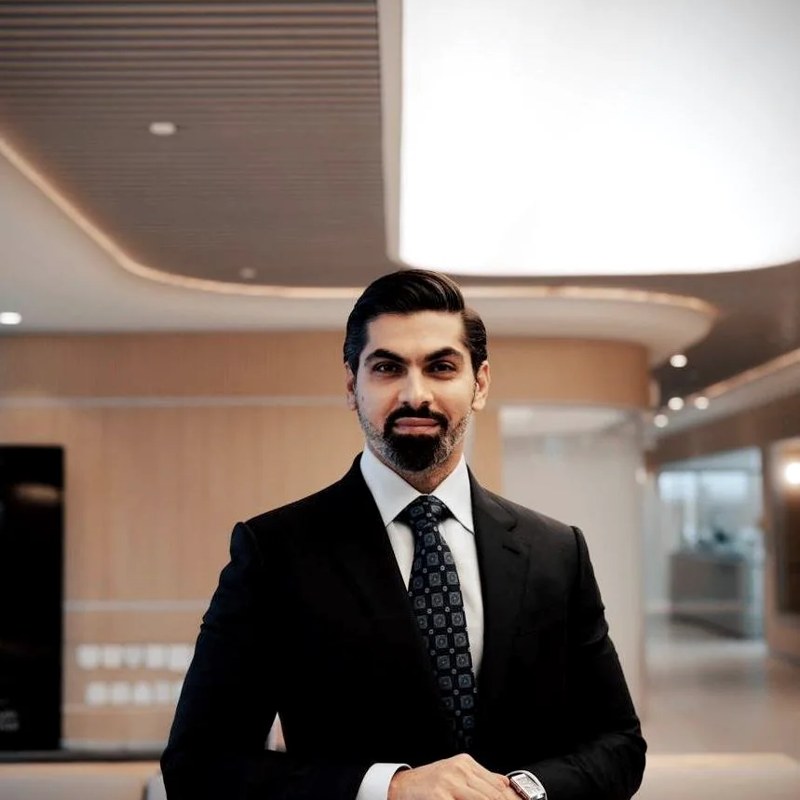
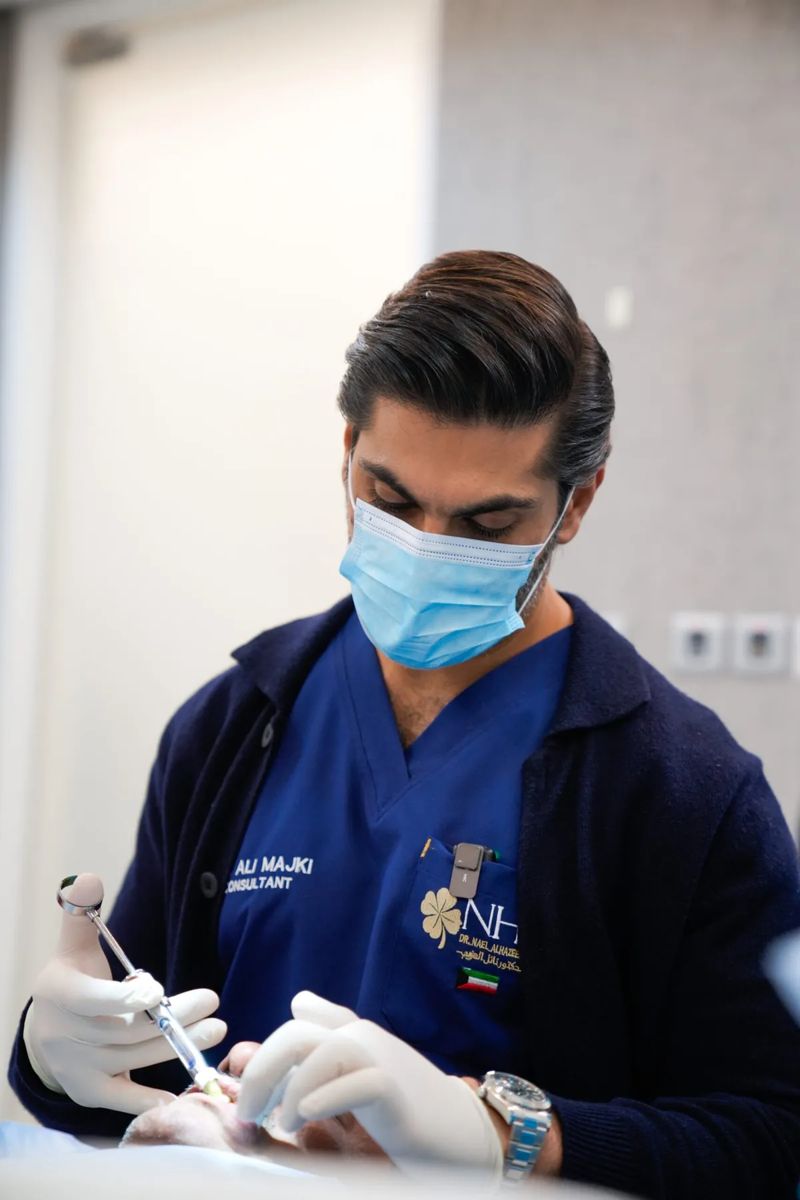
Dr. Ali Majki is a consultant in comprehensive and cosmetic dentistry, not an orthodontist. At Aline Dental in Shaab he uses clear aligners for suitable mild to moderate cases, often as part of a wider smile plan, for example aligning teeth first so that veneers need less enamel removal. Cases that need complex bite or jaw correction are referred to an orthodontist, and patients are told so at the first visit.
People looking for Invisalign Kuwait wide type it many ways, "invisaline kuwait" and "invisilign kuwait" included; the advice on choosing is the same whatever the spelling.
Scientific sources
Best A.D., Shroff B., Carrico C.K., Lindauer S.J. Treatment management between orthodontists and general practitioners performing clear aligner therapy. The Angle Orthodontist, 2017; 87(3): 432-439. doi:10.2319/062616-500.1
Robertson L., Kaur H., Fagundes N.C.F., Romanyk D., Major P., Flores Mir C. Effectiveness of clear aligner therapy for orthodontic treatment: a systematic review. Orthodontics & Craniofacial Research, 2020; 23(2): 133-142. doi:10.1111/ocr.12353
Haouili N., Kravitz N.D., Vaid N.R., Ferguson D.J., Makki L. Has Invisalign improved? A prospective follow-up study on the efficacy of tooth movement with Invisalign. American Journal of Orthodontics and Dentofacial Orthopedics, 2020; 158(3): 420-425. doi:10.1016/j.ajodo.2019.12.015
Kravitz N.D., Dalloul B., Zaid Y.A., Shah C., Vaid N.R. What percentage of patients switch from Invisalign to braces? American Journal of Orthodontics and Dentofacial Orthopedics, 2023; 163(4): 526-530. doi:10.1016/j.ajodo.2022.03.016
Frequently asked questions
Do I need an orthodontist for Invisalign? Not always. Mild to moderate crowding or spacing can be treated by a trained dentist; complex bites, jaw discrepancies and difficult movements belong with an orthodontist.
Is a Diamond or Platinum Invisalign provider better? The tier shows how many cases a clinic submits. It suggests experience, but it does not tell you how your case will be selected, planned and finished.
How do I know if my case is too complex for aligners? Ask directly after the examination and X-rays. Deep bites, large rotations of rounded teeth and jaw-position problems are the usual reasons for referral or for fixed braces.
How many refinements are normal with Invisalign? Needing two or three extra rounds is common, and very few patients finish with the first set alone.
Are clear aligners in Kuwait as effective as braces? For mild to moderate problems, results can be comparable; for some movements fixed braces remain more predictable.
Where can I find an Invisalign provider in Kuwait? Dr. Ali Majki sees patients at Aline Dental in Shaab, Kuwait; patients come to him from across Kuwait — from Jahra to Al-Rai and The Avenues — and from Doha and Qatar.