What is a Maryland bridge and who is it for?
A Maryland bridge is a minimal-preparation way to replace a single missing tooth, usually at the front. Instead of crowning the neighbouring teeth, a false tooth is held by thin wings bonded to the back of one or both neighbours. It suits a healthy mouth with a single gap — often a younger patient — where preserving the adjacent teeth matters and an implant is not yet suitable.
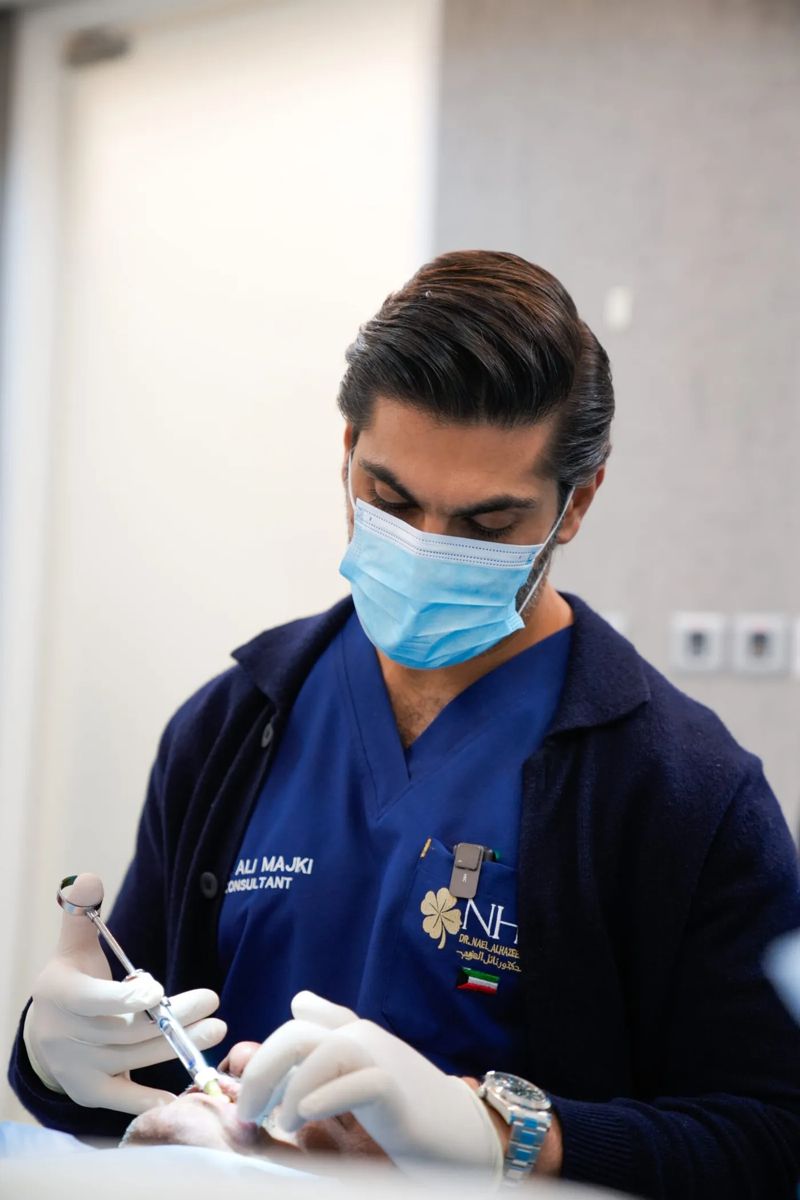
How a resin-bonded bridge works
Also called a resin bonded bridge or adhesive bridge, it is essentially a false tooth with a thin metal or ceramic wing on the back. Little or no enamel is removed from the supporting tooth — a key contrast with a conventional bridge, which crowns the neighbours. The wing is bonded with adhesive resin, which is where the name comes from. Because the preparation is so conservative, the tooth underneath is largely untouched.
Who does a Maryland dental bridge suit?
The ideal candidate has a single missing front tooth, healthy and well-positioned neighbouring teeth with sound enamel to bond to, a light-to-moderate bite, and good gum health. It is often used for teenagers and young adults whose jaws are still maturing and who are not ready for an implant, or for anyone who wants to avoid cutting down healthy teeth. It is less suited to back teeth, heavy biters or gaps where the neighbours are already heavily restored.
Advantages of the adhesive bridge
The appeal is conservation. There is no need to drill healthy enamel into crown shapes, no surgery, and the whole thing is far more reversible than a conventional bridge. For a suitable front-tooth gap it is quick, comfortable and looks natural when well made. It can also serve as a sensible interim solution while a younger patient waits until an implant becomes appropriate.
How long does a Maryland bridge last?
Honesty matters here. The main weakness is debonding — the wing can come loose. A review of fixed restorations found five-year survival of fixed bridges in the range of about 89 to 95%, but resin-bonded designs failed more often than conventional or implant-supported ones, at roughly 4.3% per year over ten years compared with around 1.1% for conventional restorations. In plain terms, a Maryland bridge is more likely to come off over the years and need re-bonding. The good news is that a debond is usually re-cementable rather than a disaster.

Keeping it in place
Day-to-day care protects the bond and the supporting tooth. Clean carefully around and under the false tooth, keep the margins plaque-free, and avoid biting hard objects directly on it. A Cochrane review found powered brushes reduce plaque and gum inflammation a little more than manual brushing, though consistent technique matters most. Dr. Ali Majki checks the bond and the gum at routine reviews so a loosening wing is caught before it fully debonds.
Scientific sources
Pjetursson B.E., Zwahlen M., Lang N.P. Quality of reporting of clinical studies to assess and compare performance of implant-supported restorations. Journal of Clinical Periodontology, 2012. doi:10.1111/j.1600-051X.2011.01828.x
Yaacob M., Worthington H.V., Deacon S.A., Deery C., Walmsley A.D., Robinson P.G., Glenny A.M. Powered versus manual toothbrushing for oral health. Cochrane Database of Systematic Reviews, 2014. doi:10.1002/14651858.CD002281.pub3
Frequently asked questions
How long does a Maryland bridge last? It can serve well for years, but it debonds more often than a conventional or implant bridge, so expect it may need re-cementing at some point.
Does a Maryland bridge ruin the neighbouring teeth? No — little or no enamel is removed, which is its main advantage over a conventional bridge.
Can a Maryland bridge be used on back teeth? It is mainly for front teeth; heavy chewing forces at the back make debonding more likely.
What happens if the wing comes off? It can usually be cleaned and re-bonded, so a debond is rarely a serious problem if dealt with promptly.
Is a Maryland bridge better than an implant? For a young patient or to avoid surgery it can be ideal, but an implant is generally more durable for a long-term single-tooth replacement.
Where can I get a Maryland bridge in Kuwait? Dr. Ali Majki sees patients at Aline Dental in Shaab, Kuwait; patients come to him from across Kuwait — from Jahra to Al-Rai and The Avenues — and from Doha and Qatar.